
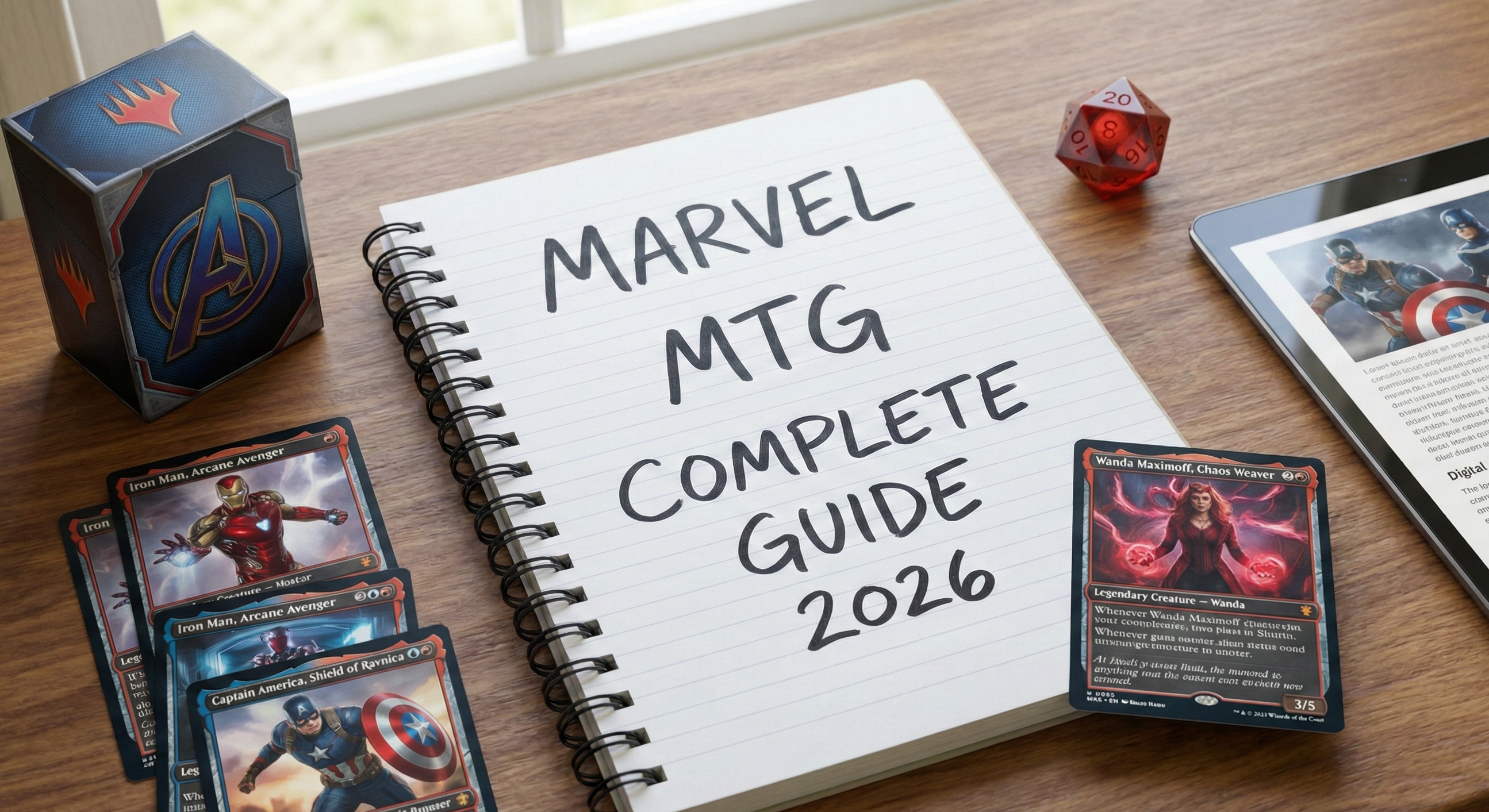

Quick Verdict
The Avengers have assembled on the Stack. From the Secret Lair drops to the Spider-Man set's Soul Stone phenomenon and the upcoming Marvel Super Heroes expansion, this is the definitive guide to the most ambitious crossover in Magic's history.
SECRET LAIR DROPS
.jpg)
Captain America, First Avenger (Secret Lair)
Best Commander Investment - Premium Voltron commander with strong value retention
- ✓Mechanically unique and Commander-legal
- ✓Best-in-class Voltron commander for equipment decks
.jpg)
The Soul Stone (Cosmic Foil Sol Ring)
Ultimate Chase Card - The lottery card that defined the Spider-Man set
- ✓Less than 1% pull rate creates extreme scarcity
- ✓BGS 9.5+ copies sell for $28,500-$45,000
.jpg)
Anti-Venom (Spider-Man Set)
Best Budget Hidden Gem - Powerful staple now accessible after price drop
- ✓Dropped to $11 after Soul Stone hunt flooded market
- ✓Excellent in Commander black decks
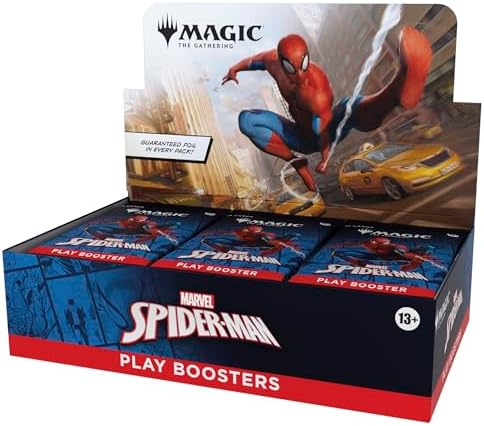
Marvel's Spider-Man Play Booster Box
Best for Opening - Hunt for Soul Stone and Web-slinging mechanics
- ✓Contains 24 Play Booster packs
- ✓Chance to pull Soul Stone (Cosmic Foil)
SAFETY TECHNOLOGY Expert Analysis.
The convergence of Hasbro's Magic: The Gathering and Marvel Enterprises represents a watershed moment in collectible gaming history. As of January 2026, we've witnessed the initial phases of this multi-year partnership: the Secret Lair Superdrop of November 2024, the record-breaking Spider-Man set of September 2025, and now the community sits in speculative fervor following December 2025's prologue previews for the massive Marvel Super Heroes expansion, scheduled for June 26, 2026.
This isn't just another Universes Beyond set—this is the most ambitious crossover in Magic's history, targeting the "forever fandoms" that span generations. From The Soul Stone (Cosmic Foil Sol Ring variant) lottery cards that sold for $45,000 to the mechanical depth of the upcoming Power-Up and Plans mechanics, Marvel Magic has fundamentally altered how we think about IP integration in trading card games.
In this comprehensive guide, we'll break down everything you need to know about Marvel Magic: The Gathering—from the financial performance of the Secret Lair drops to the technical rules interactions that make or break Commander decks, and the strategic insights needed to navigate the 2026 release.
The Timeline of Heroes: A Strategic Overview
The Marvel Magic ecosystem has been carefully orchestrated across three distinct waves, each targeting different market segments at different times. Understanding this release schedule is crucial for both collectors and players.
Product Fatigue Warning
Between June 2025 and June 2026, players have been exposed to Final Fantasy, Edge of Eternities, Spider-Man, Avatar: The Last Airbender, and soon Marvel Super Heroes. This congestion has created "Product Fatigue," where wallet share is aggressively contested. For Marvel Super Heroes to succeed, it must offer mechanical depth and "must-play" staples that previous sets lacked.
The Secret Lair Proving Ground (November 2024)
The initial foray into the Marvel universe functioned as a market test to gauge the price elasticity of the crossover audience. Released on November 4, 2024, the Marvel Superdrop featured five distinct drops centered on Captain America, Black Panther, Iron Man, Wolverine, and Storm.
The "Bonus Card" Economic Driver
A critical component of this release was the "Arcane Signet" incentive. WotC included a mechanically unique Arcane Signet (Earth's Mightiest Emblem) only with orders exceeding $199. This artificial threshold forced many casual buyers to upgrade from single drops to full bundles, artificially inflating the average transaction value.
Market Insight
The secondary market for sealed bundles remains robust ($320–$370 range), significantly higher than the sum of the singles. This indicates that "sealed investors" are a major demographic for this IP, valuing the packaging and the potential of the contents over the game pieces themselves.
Single Card Retention: The "Bling" Factor
Analysis of the secondary market in early 2026 shows a clear divergence in value retention:
Captain America, First Avenger: The foil version has maintained a price point of ~$40–$50. This is driven by his viability as a "Voltron" (equipment-focused) Commander. The specific mechanics—attaching equipment at the beginning of combat—make him a best-in-class option for Boros or Mono-White equipment decks, ensuring demand remains high regardless of the card's scarcity.
Other Heroes: Cards like Black Panther and Iron Man have seen softer retention, stabilizing closer to their initial MSRP. This suggests that without top-tier competitive viability, the "IP tax" (the premium paid for the character brand) eventually wears off as supply saturates the market.
The "Mechanically Unique" Controversy
The Secret Lair drops introduced mechanically unique cards that are legal in Commander, Legacy, and Vintage. Unlike the Stranger Things Secret Lair, which saw "in-universe" versions reprinted quickly in New Capenna, there has been no announcement of "Magic-skinned" versions of these Marvel heroes as of January 2026.
The Spider-Man Tentpole (September 2025)
The Marvel's Spider-Man set (released September 26, 2025) was the first full expansion, legal in Standard, Modern, and Pioneer. Its reception provides the blueprint for what to avoid—and what to emulate—in future content.
Mechanical Post-Mortem: The Failure of "Web-slinging"
The set's signature mechanic, Web-slinging, allowed players to pay an alternative cost to cast spells by returning a tapped creature to their hand.
Design Intent: The mechanic was designed to simulate Spider-Man's agility and "hit-and-run" tactics.
Competitive Reality: In practice, the mechanic was deemed "win-more." It required an established board state (a tapped creature) to function. If a player was behind on board or facing creature removal, the mechanic was useless. Consequently, Web-slinging cards saw almost no play in competitive Modern or Pioneer decks.
Critical Rules Clarification: Commander Tax
IMPORTANT: A major point of confusion—and a vital topic for Commander players—is the interaction with the Command Zone. Because Web-slinging is an alternative casting cost, it does NOT bypass the "Commander Tax" (the additional 2 mana cumulative cost for recasting a Commander). Players mistakenly equated it with Ninjutsu, which is an activated ability that cheats the tax.
The Rule: Returning the creature is a cost, not an effect. It happens immediately upon casting. Commander Tax still applies because this is an Alternative Cost to cast, not an activated ability like Commander Ninjutsu (which explicitly bypasses the command zone tax).
The "Soul Stone" Phenomenon
Despite the lukewarm gameplay reception, the set was a financial juggernaut due to The Soul Stone (Cosmic Foil Sol Ring variant).
The Card: A Mythic Rare Legendary Artifact (Sol Ring variant) that grants indestructibility and recursion. The "Soul Stone" name refers to the Infinity Stone design featured in the Cosmic Foil treatment.
The Chase: The "Cosmic Foil" variant was seeded in less than 1% of Collector Boosters. This created a scarcity model similar to the serialized cards of previous sets.
Market Impact: High-grade copies (BGS 9.5+) of the Soul Stone (Cosmic Foil Sol Ring) have sold for upwards of $28,500 to $45,000. This single card sustained the opening velocity of the product.
Because whales opened thousands of boxes hunting for The Soul Stone (Cosmic Foil Sol Ring), the market was flooded with the set's regular Rares and Mythics. Powerful cards like Anti-Venom and Green Goblin plummeted in price, making the set an incredible value for budget deck builders. This dichotomy—expensive chase cards vs. cheap staples—is the single most important narrative for understanding the Spider-Man set's market dynamics.
See our top picks above for detailed information about Anti-Venom, The Soul Stone (Cosmic Foil Sol Ring), and other Marvel cards.
Draft Environment & Format Fatigue
The draft format was criticized for being unbalanced and "on rails." The limited viability of the Web-slinging mechanic meant that specific archetypes (likely Blue/White flyers) dominated, reducing replayability. This accelerated the community's pivot away from Spider-Man and toward the subsequent Avatar: The Last Airbender set (Nov 2025).
Content Strategy for 2026
Content for Spider-Man in 2026 should focus on "Constructed" applications (Commander decks) rather than Limited play, as the draft format is effectively dead. Focus on budget upgrades, hidden gems, and Commander deck techs.
The Marvel Super Heroes Horizon (June 2026)
In December 2025, WotC broke tradition to release a "Prologue" for the June 2026 Marvel Super Heroes set. Early previews indicate a correction toward higher power levels and complexity, likely to court the Commander demographic that felt alienated by Spider-Man's simplicity.
Shift in Design Philosophy: Power & Complexity
The Coming of Galactus: A Saga that creates a 16/16 token with a land-destruction attack trigger. This is a "top-down" design masterpiece, translating the lore of the "World Eater" into game mechanics. The sheer scale of the token (16/16) suggests a push for "Battlecruiser Magic," a style favored by casual Commander players.
The "Power-Up" Mechanic: This new keyword allows for a "Once Per Game" activation of a powerful ability, which is discounted if the creature entered the battlefield that turn.
The Blink Loophole
Tactical Analysis: In Magic, "Once per game" restrictions typically apply to the object. If the card changes zones (e.g., goes to exile and comes back), it is considered a new object with no memory of its previous existence. This means "Blink" decks (using cards like Cloudshift or Ephemerate) can reset this restriction, turning a "Once per game" ultimate into a "Once per turn" engine if built correctly. This is a massive power-level unlock that savvy players will exploit.
The "Plans" Mechanic: A new Enchantment subtype that accumulates counters and sacrifices itself for an effect.
Proliferate Synergy Warning
Because Plans rely on counters, they are inherently broken by the Proliferate mechanic (which adds counters to any permanent that already has them). A Doctor Doom deck that utilizes Proliferate engines (like Atraxa or Flux Channeler) can theoretically trigger these "ultimate" effects immediately, bypassing the intended delay. This interaction is a prime candidate for "Broken Combo" articles and competitive deck techs.
The "Villain" Typal Boom
The set introduces significant support for a "Villain" creature type or grouping. Cards like Doom Reigns Supreme trigger when Villains enter the battlefield.
Speculation Opportunity
Since "Villain" is not an existing creature type in Magic (unlike "Hero," which has seen minor support), WotC likely uses a "batching" mechanic (similar to "Outlaws" in Thunder Junction which grouped Assassins, Mercenaries, Pirates, Rogues, and Warlocks). Alternatively, they may introduce "Villain" as a new creature type.
Holocollector Opportunity: Creating content that identifies "Villains" from Magic's history (e.g., Nicol Bolas, Elesh Norn) that might be errata'd or included in this batch could drive speculative sales of older cards.
Commander Integration: The Fantastic Four
The "Prologue" stream confirmed four Commander Preconstructed decks, with one focused on the Fantastic Four.
Mechanic Rumor: Leaks suggest the Fantastic Four deck allows any of the four members (Mr. Fantastic, Invisible Woman, Human Torch, The Thing) to serve as the Commander, possibly with a "Partner with" or "Team Up" mechanic to allow multiple to be in the Command Zone simultaneously. This would mirror the "Friends Forever" mechanic from Stranger Things or the "Partner" mechanic from Commander 2016, both of which are fan favorites.
The Collector's Vault: Financial Analysis
From a business perspective, the Marvel Magic strategy has been wildly successful. Revenue for the Universes Beyond segment grew by 55% year-over-year in 2025. However, this growth masks a shift in consumer behavior.
Investing in Marvel: "Cosmic Foils" vs. Serialized Cards
The Spider-Man set's sales were heavily front-loaded, driven by the hunt for The Soul Stone (Cosmic Foil Sol Ring variant), while draft attendance for the set plummeted faster than historical averages due to a lackluster limited environment. This "Lottery Economy"—where the value of a box is tied almost entirely to a <1% pull rate—has significant implications for secondary market singles.
The Soul Stone (Cosmic Foil Sol Ring variant) created a unique market dynamic. High-grade copies (BGS 9.5+) command $28,500-$45,000, representing a 40% premium over raw cards. This grading premium creates a secondary market for grading services, as condition is everything for these ultra-rare chase cards. Meanwhile, the flood of regular Rares and Mythics from box openings has created a "budget paradise" for players who don't care about the lottery cards.
Secret Lair Watch: Value Retention Analysis
Holding Value: Captain America (foil) maintains $40-50, driven by Commander playability.
Softening: Black Panther and Iron Man have stabilized closer to MSRP, indicating that without competitive viability, the IP tax wears off.
Investment Thesis: The mechanically unique nature of these cards, combined with potential licensing limitations, suggests these specific versions may never be reprinted with Marvel art. This exclusivity strengthens the long-term investment narrative.
Print Run Analysis: The Product Fatigue Factor
With Final Fantasy (June 2025) and Avatar (Nov 2025) preceding this set, player wallets are strained. The Spider-Man set's weak draft reception suggests that players are becoming discerning. They will not buy a set solely for the IP; the gameplay must hold up.
Strategic Forecast
Marvel Super Heroes appears to be correcting this by adding high-complexity mechanics. This shift from "simple entry-level product" to "complex gamer product" is a crucial marketing pivot WotC is making to retain the core gamer while keeping the collector interested. Limited print runs might save the value of the 2026 set if gameplay delivers.
Commander Corner: Deck Techs & Strategies
The Commander format is where Marvel Magic truly shines. Here are the top strategies for building competitive decks around these iconic characters.
Captain America: The Voltron Master
Archetype: Equipment-focused Voltron Commander
Power Level: High
Budget: Mid to High
Captain America's ability to attach equipment at the beginning of combat makes him a best-in-class Voltron commander. His specific mechanics reward aggressive equipment strategies.
Captain America, First Avenger
Premium Voltron commander with strong value retention. Foil version maintains $40-50 value due to competitive viability in equipment decks.
Key Cards to Pair:
- Colossus Hammer: The premier equipment for Voltron strategies
- Shadowspear: Provides trample and lifelink
- Swiftfoot Boots / Lightning Greaves: Protection and haste
- Sword of Feast and Famine: Protection and card advantage
Strategy: Build a board of equipment, then use Captain America's ability to attach them all at once, creating a massive threat that can one-shot opponents.
Doctor Doom: The Villain Mastermind (2026)
Archetype: Villain Tribal / Plans Combo
Power Level: Very High (Predicted)
Budget: High
Doctor Doom will likely be the centerpiece of the Villain tribal strategy, with Plans mechanics that can be accelerated through Proliferate.
Key Synergies:
- Flux Channeler: Proliferate on instant/sorcery cast
- Evolution Sage: Proliferate on landfall
- Vorinclex, Monstrous Raider: Double counters
- Atraxa, Praetors' Voice: Proliferate every turn
Strategy: Use Proliferate engines to advance Plans immediately, bypassing the intended delay and creating powerful combo turns.
Spider-Man: The Kindred Commander
Archetype: Spider / Kindred Tribal
Power Level: Mid
Budget: Low to Mid
While Web-slinging failed in competitive formats, Spider-Man can work in casual Commander pods as a Kindred (tribal) commander.
Key Cards:
- Miles Morales: Additional Spider support
- Spider tokens: Generate value through Web-slinging
- Kindred Discovery: Card draw engine
- Patriarch's Bidding: Mass recursion
Strategy: Build a board of Spiders, use Web-slinging to generate value, and overwhelm opponents with tribal synergies.
Remember: Commander Tax Still Applies
When using Web-slinging with your Commander, remember that Commander Tax still applies. This makes the mechanic significantly weaker for Commanders than casual players realize. Plan your mana curve accordingly.
Technical Rules Deep Dive
Credibility is the currency of content in the MTG space. If the blog post misinterprets a rule interaction, it will be dismissed by the community. Here are the essential technical verifications.
Mechanic: Web-slinging (Spider-Man Set)
The Rule: "You may cast this spell for its web-slinging cost. If you do, return a tapped creature you control to its owner's hand."
The Trap: Returning the creature is a cost, not an effect. It happens immediately upon casting.
Commander Interaction: As established, this is an Alternative Cost to cast. It is not an activated ability like Ninjutsu or Commander Ninjutsu (which explicitly bypass the command zone tax). Therefore, casting a Commander via Web-slinging does incur the Commander Tax.
Implication: This makes the mechanic significantly weaker for Commanders than casual players realize. The blog post must clarify this to prevent "feel bad" moments for customers.
Mechanic: Plans (Marvel Super Heroes)
The Rule: A new Enchantment subtype that gains counters and sacrifices itself at a threshold.
The Interaction: Proliferate.
Verification: Rule 701.27a states Proliferate adds a counter of a kind the permanent already has.
Implication: Since Plans use counters (likely "Plan counters" or "Lore counters"), Proliferate works. However, unlike Sagas which trigger after the draw step or when a counter is added, Plans appear to have a static ability that checks for the threshold ("When this has X counters, sacrifice it").
Strategic Advice: Players should build Doctor Doom decks with Flux Channeler, Evolution Sage, and Vorinclex, Monstrous Raider to double the speed of their Plans.
Mechanic: Power-Up (Marvel Super Heroes)
The Rule: "Once per game" activation.
The Loophole: In Magic, "Once per game" restrictions typically apply to the object. If the card changes zones (e.g., goes to exile and comes back), it is considered a new object with no memory of its previous existence.
Implication: "Blink" decks (using cards like Cloudshift or Ephemerate) can reset this restriction. This turns a "Once per game" ultimate into a "Once per turn" engine if built correctly. This is a massive power-level unlock that Holocollector needs to highlight.
The Holocollector Verdict
After analyzing the entire Marvel Magic ecosystem—from the Secret Lair drops to the Spider-Man set's mixed reception and the promising previews for Marvel Super Heroes—here's our definitive recommendation.
For Collectors & Investors
Buy Singles for Spider-Man: The set's regular Rares and Mythics have dropped to accessible prices due to the Soul Stone hunt flooding the market. Cards like Anti-Venom ($11) represent incredible value for their power level.
Pre-order Boxes for Super Heroes: The June 2026 set appears to be correcting Spider-Man's mechanical weaknesses with higher complexity and power levels. If the gameplay delivers, limited print runs combined with strong mechanics could create lasting value.
Secret Lair Strategy: Captain America is the clear winner for value retention. If you're buying for investment, focus on the foil version. The mechanically unique nature and potential licensing limitations make these cards potentially never-to-be-reprinted.
For Commander Players
Spider-Man Set: Focus on singles, not sealed product. The draft format is dead, but the constructed staples are cheap. Build budget decks around undervalued cards like Anti-Venom and Green Goblin.
Marvel Super Heroes: This set is designed for you. The Power-Up and Plans mechanics, combined with Villain tribal support, suggest WotC is specifically targeting the Commander demographic. Pre-order the Fantastic Four precon if the Partner/Team Up mechanic is confirmed.
Captain America: If you play Voltron strategies, this is a must-have. The $40-50 foil price is justified by his best-in-class mechanics for equipment decks.
For Competitive Players
Spider-Man Set: Web-slinging failed in competitive formats. Focus on the set's non-mechanic staples that have dropped in price.
Marvel Super Heroes: Watch for Quicksilver, Brash Blur. "Turn Zero" playability (starting the game on the battlefield) is high-risk design that could dominate Modern or face ban risk. Sell into the hype during pre-release if it spikes.
Future Outlook & Second-Order Analysis
The Marvel Magic collaboration is a complex ecosystem that requires nuanced content approach. Here are the second-order effects to watch.
The "Villain" Speculation Market
The introduction of "Villain" payoffs creates a new speculation market. Older cards that feel like villains but don't have the type might receive Oracle updates (errata) or simply synergize well.
Prediction: Cards like Nicol Bolas, the Ravager or Yawgmoth, Thran Physician could see price spikes if they are retrospectively batched into the "Villain" group or if the Plans mechanic supports their playstyles.
The Risk of Product Fatigue
With Final Fantasy (June 2025) and Avatar (Nov 2025) preceding this set, player wallets are strained. The Spider-Man set's weak draft reception suggests that players are becoming discerning. They will not buy a set solely for the IP; the gameplay must hold up.
Implication: Marvel Super Heroes appears to be correcting this by adding high-complexity mechanics. This shift from "simple entry-level product" to "complex gamer product" is a crucial marketing pivot WotC is making to retain the core gamer while keeping the collector interested.
The "Turn Zero" Meta Risk
The card Quicksilver, Brash Blur introduces "Turn Zero" playability (starting the game on the battlefield if certain conditions are met, such as exiling two white cards from your hand or revealing it in your opening hand).
Analysis: In competitive Magic (Modern/Legacy), "free" spells (like Grief or Fury) have historically been problematic and prone to bans. Quicksilver starting in play is a high-risk design, but the balance clause (requiring a cost like exiling cards from hand) prevents it from being completely free value, similar to how Leyline of the Void requires it to be in your opening hand.
Forecast: If Quicksilver becomes dominant in Modern, expect a spike in price followed by a ban risk. Holocollector should advise "Sell into the Hype" for this specific card during the pre-release window to protect customers from value loss.
Conclusion: The Crossover of the Century
The Marvel Magic: The Gathering collaboration represents the most ambitious crossover in the game's history. From the Secret Lair drops that tested market elasticity to the Spider-Man set's "Soul Stone" phenomenon and the promising mechanics of Marvel Super Heroes, this partnership has fundamentally altered how we think about IP integration in trading card games.
The key to success lies in distinguishing between the financial volatility of the collector market (The Soul Stone and other Cosmic Foil chase cards) and the mechanical density of the player market (Plans/Power-Up). Whether you're a whale investor hunting for graded chase cards, a Commander brewer looking for the next broken combo, or a casual fan entering Magic through your favorite Marvel characters, there's a path through this crossover that leads to purchase.
The Avengers have assembled on the Stack. Now it's time to build your deck.
External References
Detailed Comparison
| Release | Release Date | Primary Target | Format Legality | Key Feature |
|---|---|---|---|---|
| Secret Lair x Marvel | Nov 4, 2024 | Premium Collectors | Commander, Legacy, Vintage | Mechanically unique heroes |
| Marvel's Spider-Man | Sept 26, 2025 | Mass Market / Standard | Standard, Modern, Pioneer | Soul Stone lottery card |
| Marvel Super Heroes | June 26, 2026 | Commander Players | Standard, Modern, Commander | Power-Up & Plans mechanics |
Frequently Asked Questions
🔗 Related Resources
More Reviews:
Related Articles
.jpg)
Hexproof vs Shroud MTG: The Complete Difference Explained (2026)
Hexproof vs Shroud in Magic: The Gathering — what the two abilities actually do, why they're not the same, and which one is stronger in 2026 Commander, Modern, and Standard play.
.png)
MTG Legend Rule Explained: How Legendary Permanents Work (2026)
The MTG legend rule explained in full — what triggers it, how the modern '2013 fix' works, and how legendary creatures, lands, and artifacts interact with each other in 2026 Commander, Modern, and Standard play.
.png)
MTG Persist vs Undying: The Complete Mechanic Comparison (2026)
Persist vs Undying in Magic: The Gathering — the rules, counter interactions, combo applications, and which one is stronger in 2026 Modern, Commander, and Pioneer.